Unlocking the Flavors of Thailand: A Beginner's Guide to Thai Food and Cuisine (6)
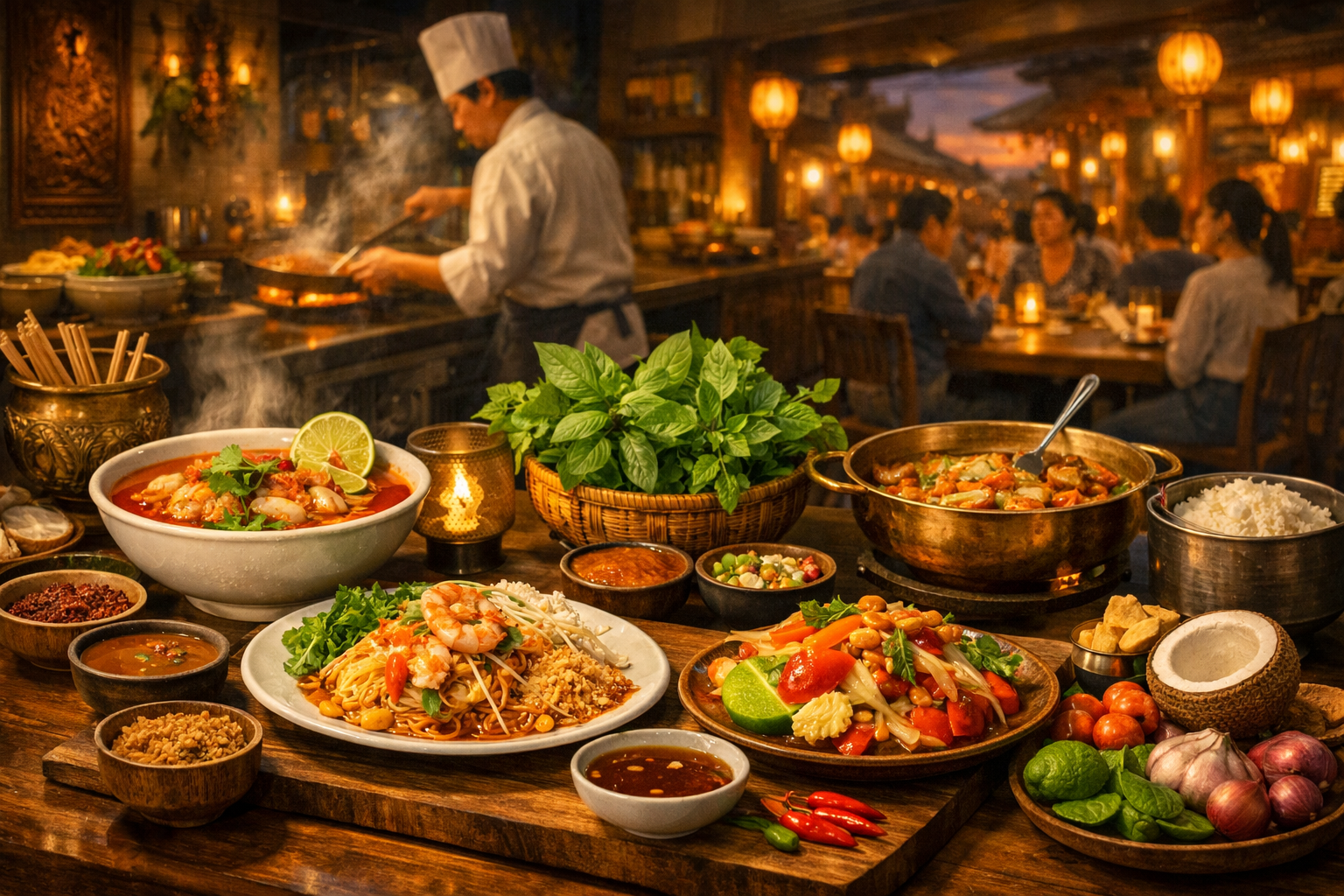
Ever walked past a Thai restaurant and been overwhelmed by the menu? Or maybe you’ve tried a dish and loved it but have no idea what went into it? Thai cuisine is a vibrant, complex tapestry of flavors, and it can seem daunting to navigate. But don't worry! This guide is designed to demystify Thai food and give you a solid foundation for understanding and appreciating its deliciousness. We'll break down the key ingredients, cooking techniques, and regional variations, so you can confidently order your next Thai meal – or even start experimenting in your own kitchen.
Why is Thai Food So Unique? The Foundation of Flavor
Thai food isn't just about heat; it's about balance. The core principle is achieving harmony between five fundamental tastes: sweet, sour, salty, bitter, and spicy. This intricate balance is what sets Thai cuisine apart from many other Asian cuisines. It’s a culinary philosophy as much as it is a set of recipes. Understanding this balance will help you appreciate the nuances of each dish.
The Essential Ingredients: Your Thai Pantry Starter Kit
Before we dive into specific dishes, let's look at the key ingredients that form the backbone of Thai cooking. Building a small pantry of these essentials will open up a world of possibilities.
- Chilies: These aren't just for heat! Different varieties offer different flavor profiles. Bird’s eye chilies are intensely spicy, while red chilies are milder and sweeter. Dried chilies are often rehydrated and used for their smoky flavor.
- Galangal: Often mistaken for ginger, galangal has a more citrusy, pine-like aroma and flavor. It’s crucial for many curries and soups.
- Lemongrass: This fragrant stalk adds a bright, citrusy note to dishes. Use only the tender inner part.
- Kaffir Lime Leaves: These leaves have a distinctive, intensely fragrant aroma that is essential for many Thai curries and soups. They are often added whole and removed before serving.
- Fish Sauce (Nam Pla): Don't be put off by the smell! This fermented fish sauce is the cornerstone of Thai seasoning, adding a salty, umami depth.
- Palm Sugar: This natural sweetener has a caramel-like flavor that’s different from refined sugar.
- Lime Juice: Fresh lime juice is a must for that essential sourness.
- Coconut Milk: Full-fat coconut milk is used extensively in curries and soups, adding richness and creaminess.
- Thai Basil: This variety has a slightly anise-like flavor and a more robust aroma than Italian basil.
Regional Variations: A Taste of Thailand’s Diversity
Thailand is a large country, and its cuisine varies significantly from region to region. Here’s a quick overview:
- Central Thai: This is often what people think of as “typical” Thai food. It’s known for its balance of sweet, sour, salty, and spicy flavors, and utilizes coconut milk extensively. Dishes like Pad Thai and Green Curry originate from this region.
- Northern Thai (Lanna Cuisine): Influenced by Burmese and Chinese cuisine, Northern Thai food is milder and less spicy than other regions. It often features fermented ingredients like pork and sticky rice. Khao Soi, a creamy coconut curry noodle soup, is a signature dish.
- Northeastern Thai (Isan Cuisine): Isan cuisine is known for its bold, spicy, and savory flavors. Grilled meats, salads (often with roasted rice powder), and fermented fish sauces are common. Som Tum (papaya salad) is a quintessential Isan dish.
- Southern Thai: Southern Thai food is the spiciest and often features seafood due to its coastal location. Coconut milk and turmeric are frequently used. Massaman Curry, with its Muslim influences, is a notable Southern dish.
Decoding the Menu: Common Thai Dishes Explained
Let’s break down some popular dishes to give you a better understanding of what to expect.
- Pad Thai: Stir-fried rice noodles with tofu, shrimp (or other protein), bean sprouts, peanuts, and a tamarind-based sauce. A classic for a reason!
- Green Curry (Gaeng Keow Wan): A creamy, fragrant curry made with green chilies, coconut milk, Thai basil, and various vegetables. Often served with chicken, beef, or tofu.
- Red Curry (Gaeng Daeng): Similar to green curry but uses red chilies for a slightly different flavor profile.
- Massaman Curry (Gaeng Massaman): A milder, sweeter curry with Indian influences, featuring potatoes, peanuts, and often beef or chicken.
- Tom Yum Soup: A hot and sour soup with lemongrass, galangal, kaffir lime leaves, chilies, and mushrooms. Shrimp (Tom Yum Goong) is the most common version.
- Som Tum (Papaya Salad): A spicy and tangy salad made with shredded green papaya, tomatoes, green beans, peanuts, and a flavorful dressing.
- Mango Sticky Rice (Khao Niao Mamuang): A beloved dessert featuring sweet sticky rice, ripe mango, and a creamy coconut milk sauce.
Tips for Ordering and Enjoying Thai Food
- Spice Levels: Thai restaurants often use a scale to indicate spice levels. Be cautious! "Thai spicy" is significantly hotter than what many Western palates are accustomed to. Start with "mild" or "medium" and adjust next time.
- Don't Be Afraid to Ask: If you're unsure about a dish, don't hesitate to ask the server for clarification.
- Share Plates: Thai cuisine is often served family-style, with multiple dishes shared among diners.
- Rice is Your Friend: Steamed jasmine rice is the perfect accompaniment to most Thai dishes, helping to balance the flavors and tame the heat.
- Explore! Thai cuisine is incredibly diverse. Try something new and step outside your comfort zone.
Summary & Your Thai Food Adventure Checklist
Congratulations! You've taken the first steps towards understanding the wonderful world of Thai food. Here's a quick recap and a checklist to guide your culinary journey:
- Key Principle: Balance of sweet, sour, salty, bitter, and spicy.
- Essential Ingredients: Familiarize yourself with chilies, galangal, lemongrass, fish sauce, palm sugar, lime juice, coconut milk, and Thai basil.
- Regional Variations: Appreciate the differences between Central, Northern, Northeastern, and Southern Thai cuisine.
- Decoding the Menu: Understand the common dishes and their flavor profiles.
Your Checklist:
☐ Research a specific Thai ingredient you're unfamiliar with. ☐ Try a dish from a region of Thailand you haven't experienced before. ☐ Ask your Thai restaurant server for recommendations. ☐ Experiment with making a simple Thai dish at home (Pad Thai is a great starting point!). ☐ Most importantly: Enjoy the deliciousness!
Now go forth and explore the vibrant flavors of Thailand! Bon appétit (or aroi mak mak as they say in Thai – very delicious!).