Understanding Makha Bucha: A Deep Dive into Thai Buddhist Traditions
Understanding Makha Bucha: A Deep Dive into Thai Buddhist Traditions
If you've ever visited Thailand, especially during the cooler months of February or March, you might have noticed a distinct quietness in bustling cities and an aura of serenity among locals. This tranquility is due to a significant religious observance called Makha Bucha. For many travelers and newcomers to Thai culture, this festival can seem mysterious, but understanding its significance can greatly enhance your appreciation for the rich cultural tapestry that makes Thailand unique.
In this guide, we will delve into the essence of Makha Bucha, exploring its historical roots, religious importance, traditional observances, and how you can respectfully participate in or observe the festivities if you happen to be in Thailand during this time. By the end, you’ll have a clearer understanding of why Makha Bucha is celebrated not only by Thai Buddhists but also appreciated by visitors as an important part of Thai culture.
The Historical Significance of Makha Bucha
Makha Bucha commemorates three significant events that occurred on the full moon day in the third lunar month. These events include: - The Sermon of Vesak: It was during this sermon, given by Buddha to 1250 disciples who had assembled spontaneously and were ordained by him, that he outlined the core principles of Buddhism. - Unity Among Disciples: The spontaneous gathering of these monks reflected a rare moment of unity among followers, which is considered auspicious in Buddhist tradition. - The Full Moon: This alignment with the full moon adds to the festival's importance as it symbolizes clarity and enlightenment.
Understanding these events helps us grasp why Makha Bucha holds such profound significance within Thai Buddhism. It’s not just a celebration of historical occurrences but also an opportunity for spiritual reflection and reaffirmation of faith.
The Religious Observances
Makha Bucha is observed through various practices that are deeply rooted in Buddhist tradition. These include:
1. **Observing the Five Precepts**
One way to participate in Makha Bucha is by committing to observe the five precepts: abstaining from taking life, stealing, sexual misconduct, lying, and intoxicants. This period of self-discipline serves as a reminder of Buddhist principles and encourages moral behavior.
2. **Visiting Temples**
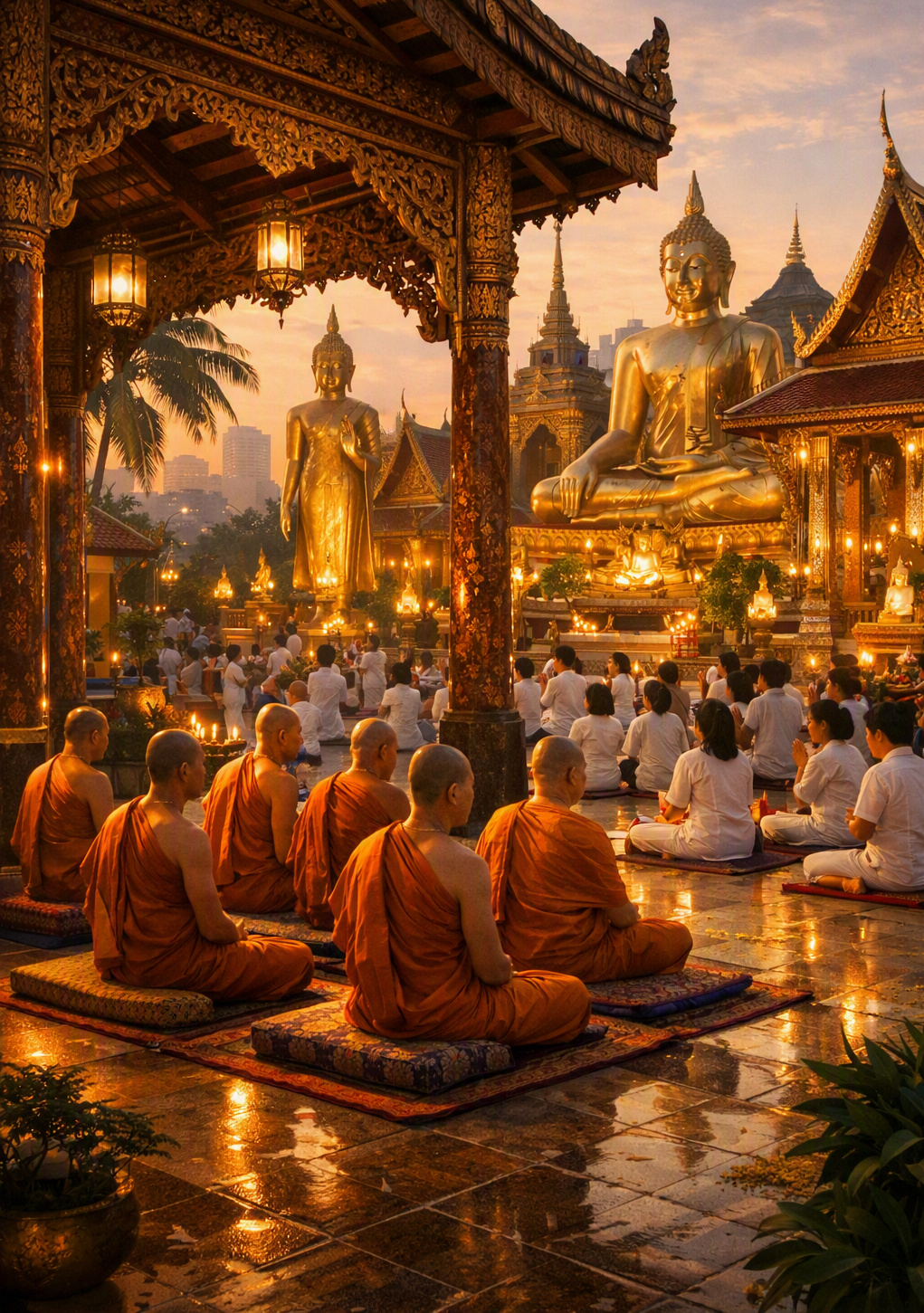
Many Thais visit temples on this day to make merit, offer alms, and listen to sermons. It’s a time for communal worship where people gather to meditate, chant, and participate in religious activities together.
3. **Makha Bucha Procession (Wian Tian)**
A highlight of the Makha Bucha observance is the Wian Tian procession. At night, monks and devotees walk clockwise around a temple three times while holding lit candles, incense sticks, and lotus flowers. This symbolic act represents the Buddha, his teachings, and the community of followers.
How to Respectfully Participate
If you find yourself in Thailand during Makha Bucha, there are several ways you can respectfully participate or observe:
1. **Attend a Temple Service**
Joining a temple service is an excellent way to experience Makha Bucha firsthand. Dress appropriately (modest clothing that covers shoulders and knees), remove your shoes when entering the temple, and follow local customs by bowing slightly upon greeting monks.
2. **Participate in Community Activities**
Some temples open their doors to visitors for merit-making activities like offering food or helping with temple upkeep. These are great opportunities to engage respectfully with locals while supporting community efforts.
3. **Observe from a Distance**
If you prefer not to actively participate, observing the festivities from outside the temple grounds can still be enriching. Pay attention to the processions and ceremonies without disturbing them; use your camera discreetly if taking photos.
Cultural Considerations
Understanding cultural nuances is crucial when interacting with locals during Makha Bucha. Here are some tips:
- Respect Silence: Many Thais take this day for spiritual reflection, so be mindful of noise levels in public spaces.
- Avoid Public Displays of Affection: Such displays can be seen as disrespectful to the solemn nature of the festival.
- Alcohol Restrictions: Given that one of Makha Bucha’s observances is abstaining from intoxicants, many establishments may not serve alcohol on this day. Respect these restrictions by refraining from drinking in public spaces.
Summary and Call-to-Action
Makha Bucha offers a glimpse into the spiritual life of Thai Buddhists, providing both locals and visitors with an opportunity for reflection and community bonding. By understanding its historical significance and participating respectfully, you can deepen your appreciation for this rich tradition.
If you’re planning to visit Thailand during Makha Bucha, make time to experience some of these observances. Attend a temple service, join in the processions, or simply observe from afar. Each act of participation is a step towards fostering mutual respect and cultural understanding.
In closing, remember that while Makha Bucha is primarily a religious event for Thai Buddhists, it also presents an opportunity for all to reflect on moral values and the importance of community. Embrace this spirit as you explore the cultural richness of Thailand during this special time.