A Journey Through Time: Understanding the History of Thailand
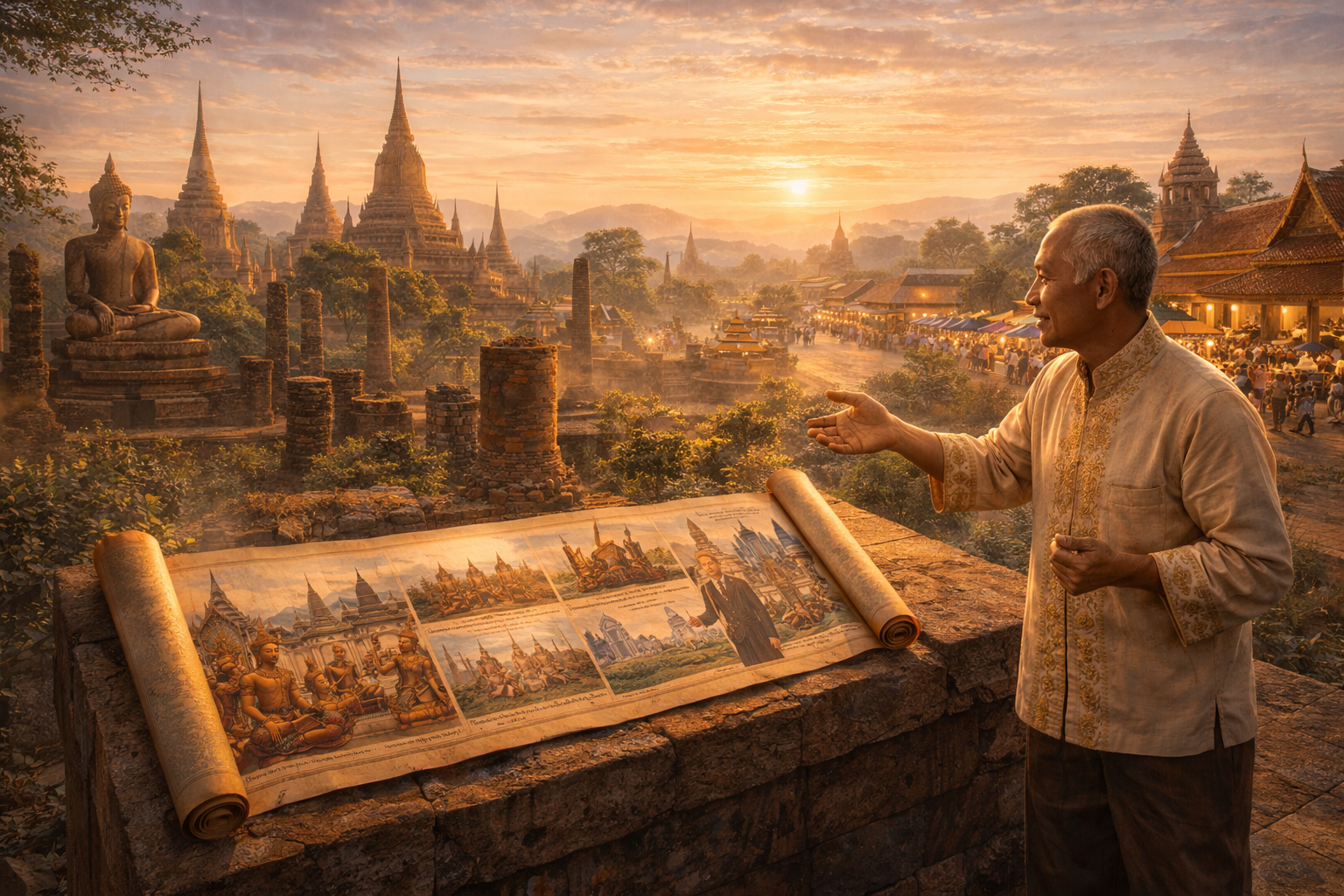
Ever found yourself captivated by the beauty of Thailand – its stunning temples, vibrant culture, and delicious food – and wondered, "What’s the story behind all of this?" Thailand boasts a remarkably long and fascinating history, often defying the typical narrative of Southeast Asian kingdoms. It’s a history of resilience, adaptation, and a unique sense of national identity. This guide will take you on a journey through the key periods and events that have shaped modern-day Thailand, making it accessible and engaging even if you’re new to the subject.
Why Bother Learning About Thai History?
Understanding a country's history is the key to truly appreciating its present. It enriches your travel experiences, helps you connect with the local culture on a deeper level, and provides a framework for understanding the nuances of Thai society. Knowing why things are the way they are makes the experience so much more meaningful.
1. Early Kingdoms & The Influence of Indian Culture (Pre-14th Century)
The story begins long before what we now know as Thailand existed. Southeast Asia was a crossroads of trade and cultural exchange, and the earliest inhabitants were primarily animistic peoples. From the 1st century CE onwards, Indian influence began to permeate the region. This wasn't a forceful conquest, but a gradual absorption of Hindu and Buddhist beliefs, social structures, and artistic styles.
- The Dvaravati Period (6th-11th Centuries): This period saw the rise of small, independent kingdoms that adopted Buddhist principles and developed distinctive artistic styles. Think of it as the first seeds of a more organized civilization taking root.
- The Srivijaya Empire (7th-13th Centuries): Based in Sumatra (modern Indonesia), Srivijaya controlled much of the Malacca Strait and exerted influence over territories including parts of what is now Thailand. This demonstrates how Thailand’s history is intertwined with broader regional powers.
- The Khmer Influence (9th-13th Centuries): The powerful Khmer Empire, based in Cambodia (and responsible for Angkor Wat), expanded its reach into northeastern Thailand. You’ll still see remnants of Khmer architecture and cultural influence in that region.
Actionable Tip: When visiting northeastern Thailand (Isan), look for Khmer ruins like Prasat Hin Phimai. These sites offer a tangible connection to this early period.
2. The Sukhothai Kingdom: The Dawn of Thai Identity (1238-1438)
This is where things get really exciting! The Sukhothai Kingdom is widely considered the birthplace of Thailand as we know it. Around 1238, Sukhothai declared its independence from Khmer rule, marking a pivotal moment.
- King Ramkhamhaeng (reigned 1278-1298): This king is a legendary figure in Thai history. He is credited with creating the Thai alphabet, codifying laws (the Ramkhamhaeng Code of Laws), and promoting Buddhism. His reign ushered in a golden age of art, literature, and architecture.
- Sukhothai’s Legacy: Sukhothai's success was built on strong leadership, efficient administration, and a focus on agriculture. The kingdom's prosperity attracted traders and artisans, further enriching its culture.
Step-by-Step Guide to Understanding Sukhothai:
- Locate Sukhothai Historical Park: This UNESCO World Heritage Site is a must-see.
- Explore the Ruins: Wander among the temples, palaces, and monuments, imagining the bustling kingdom that once thrived there.
- Read the Inscriptions: Look for the Ramkhamhaeng Stele, which bears the king’s famous laws and provides valuable insight into Sukhothai society.
3. The Ayutthaya Kingdom: A Flourishing Trading Power (1351-1767)
After Sukhothai, the Ayutthaya Kingdom rose to prominence. It was even larger and more powerful, becoming a major trading hub between China, India, and Europe.
- Strategic Location: Ayutthaya’s location at the confluence of major rivers made it ideal for trade.
- International Relations: Ayutthaya maintained diplomatic and trade relations with countries like China, Japan, Portugal, England, and France. This resulted in a unique blend of Thai and foreign influences.
- The Fall of Ayutthaya: In 1767, the Burmese army sacked Ayutthaya, marking a devastating blow to the kingdom. This event remains a significant point of national trauma in Thai history.
Tip for Travelers: Visit Ayutthaya Historical Park, another UNESCO World Heritage Site, to witness the grandeur of this once-mighty kingdom. The ruined temples are a poignant reminder of its past.
4. The Chakri Dynasty and Modern Thailand (1782 – Present)
Following the Burmese invasion, General Chao Phraya Chakri (later King Rama I) established the Chakri Dynasty, which continues to rule Thailand today.
- King Rama I (1782-1809): He rebuilt the capital at Bangkok (then known as Rattanakosin) and consolidated Thai power.
- The Royal Decrees (1832-1851): King Mongkut (Rama IV) implemented a series of reforms, modernizing the country and opening it up to Western influence.
- The Siamese Modernization: Kings Chulalongkorn (Rama V) continued this process, abolishing slavery, reforming the legal system, and establishing a modern education system. Thailand was uniquely successful in resisting European colonization, largely due to skillful diplomacy and internal reforms.
- World War II and Beyond: Thailand initially sided with the Axis powers during World War II but later switched allegiance. The latter half of the 20th century saw political instability, including military coups and periods of civilian rule.
Understanding the Monarchy: The Thai monarchy holds a unique and revered position in Thai society. Understanding its historical role is crucial to understanding modern Thailand.
5. Key Themes Running Through Thai History:
- Adaptation and Resilience: Thailand has consistently demonstrated an ability to adapt to changing circumstances and overcome challenges.
- Buddhism’s Influence: Buddhism has been a central force in shaping Thai culture, ethics, and governance.
- The Importance of Trade: Thailand’s strategic location has always made it a vital trading hub, influencing its economy and international relations.
- National Identity: The concept of "Thai-ness" has evolved over time, shaped by interactions with neighboring countries and the Western world.
Summary & Checklist: Your Thai History Toolkit
This guide has provided a broad overview of Thai history. To solidify your understanding, here's a quick checklist:
- [ ] Familiarize yourself with the key periods: Dvaravati, Srivijaya, Khmer, Sukhothai, Ayutthaya, Chakri.
- [ ] Learn about key figures: Ramkhamhaeng, King Mongkut, King Chulalongkorn.
- [ ] Visit historical sites: Sukhothai Historical Park, Ayutthaya Historical Park.
- [ ] Research the role of Buddhism: Understand its impact on Thai culture and society.
- [ ] Consider the significance of the monarchy: Appreciate its historical and contemporary role.
Call to Action: This is just the beginning! Dive deeper into specific periods or figures that particularly interest you. Explore Thai literature, art, and music to gain a richer understanding of this fascinating country's history. Happy exploring!