Thailand's Relationship with Colonial Powers: A Story of Independence
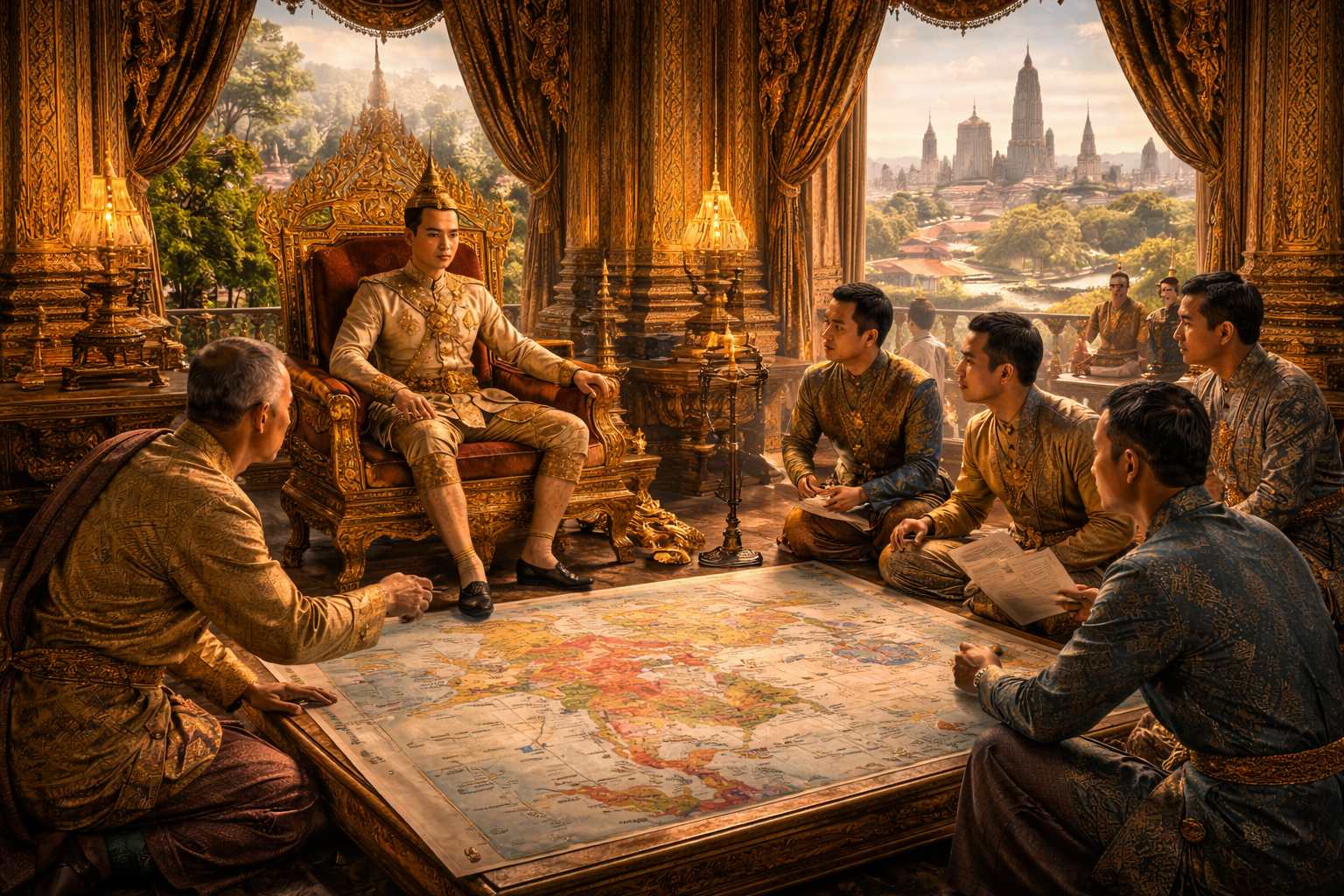
Ever wondered why Thailand is the only Southeast Asian nation that wasn't formally colonized? It’s a fantastic question, and the story behind it is a complex and fascinating tale of skillful diplomacy, strategic maneuvering, and a surprising amount of resilience. Many people assume Thailand simply avoided colonization, but the reality is far more nuanced. This guide will unpack Thailand’s unique historical relationship with European colonial powers, explaining how they managed to maintain their independence while navigating a period of intense imperial pressure. Let’s dive in!
Understanding the Context: The Scramble for Southeast Asia
To appreciate Thailand’s story, you first need to understand the broader context. The 19th century was the height of European colonialism. Britain, France, Spain, Portugal, and the Netherlands were all vying for control of territories across the globe, and Southeast Asia was a particularly attractive prize. Resources like rubber, tin, and teak were highly valuable, and strategic locations offered access to trade routes. Neighboring countries like Burma (Myanmar), Vietnam, Laos, and Cambodia all fell under colonial rule, creating a sense of urgency and pressure on Thailand.
A Brief History: From Siam to Thailand
Before we get into the specifics of colonial interactions, a quick note on names. Historically, the country was known as Siam. The name "Thailand" was officially adopted in 1939, although "Siam" is still sometimes used, especially when referring to the earlier period we’ll be discussing. The Kingdom of Siam, as it was then known, was a relatively unified entity, though it comprised diverse ethnic groups and regions. It was ruled by a monarch, and its political system was undergoing its own internal changes, adding another layer of complexity to its interactions with foreign powers.
The Problem: Facing Down the Empires – A Two-Pronged Challenge
Thailand’s challenge wasn't just one empire; it was two: Britain and France. These two powers had competing interests in the region, and Thailand found itself strategically positioned between them. The British controlled Burma and Malaya (modern-day Malaysia), while France held sway over Indochina (Vietnam, Laos, and Cambodia). This created a "buffer state" situation, where both powers wanted influence but were hesitant to directly confront each other through a full-scale colonial takeover of Thailand.
Step 1: The Bowring Treaty and Early Concessions (1855)
The initial interactions with Britain were marked by the Bowring Treaty of 1855, signed by British diplomat Sir John Bowring and King Mongkut (Rama IV). This treaty, and subsequent treaties with other European powers, granted extraterritorial rights to foreigners. This meant that foreigners living in Thailand were subject to their own country’s laws, not Thai law. While seemingly disadvantageous, these treaties were a necessary evil to gain access to European markets and technology. They also opened up Thailand to increased trade and investment, which, while unevenly distributed, did contribute to some modernization.
- Tip: Don't view the Bowring Treaty as solely negative. It facilitated crucial economic and technological advancements, albeit with significant compromises regarding sovereignty.
Step 2: King Mongkut and the "Civilization" Game
King Mongkut was a pivotal figure. He was a brilliant and forward-thinking ruler who recognized the threat posed by European colonialism. He actively engaged with Western powers, adopting aspects of Western education, administration, and infrastructure. This wasn't about wholesale adoption, but rather a strategic attempt to demonstrate to the European powers that Thailand was a “civilized” nation capable of self-governance. By appearing modern and capable, Mongkut hoped to discourage direct colonial intervention.
- Actionable Advice: Research King Mongkut's reign. His understanding of international politics and his willingness to adapt while preserving Thai identity are key to understanding Thailand's success.
Step 3: Territorial Losses and the French Problem
While Mongkut’s diplomacy bought time, it wasn’t always successful. France, under Napoleon III, was less willing to tolerate a buffer state. In the 1890s, France aggressively asserted its claims over territories bordering Laos. This led to several territorial disputes and, ultimately, significant losses for Thailand. The Franco-Siamese Crisis of 1893 resulted in Thailand ceding Laos and parts of Cambodia to French Indochina.
- Important Note: These territorial losses were a painful reality. While they helped maintain overall independence, they significantly reduced Thailand’s size.
Step 4: King Chulalongkorn (Rama V) and the Balancing Act
Mongkut's son, King Chulalongkorn (Rama V), inherited a precarious situation. He continued his father’s policy of playing Britain and France against each other. He skillfully navigated the complex relationship, seeking British support against French ambitions and vice versa. He also implemented significant internal reforms, including abolishing slavery and modernizing the legal system – further demonstrating Thailand’s progress and stability.
- Key Strategy: Chulalongkorn understood that maintaining independence required a constant, delicate balancing act. He never fully aligned with either Britain or France.
Step 5: The 1909 Boundary Treaty with Britain
The 1909 Boundary Treaty with Britain, negotiated during Chulalongkorn’s reign, formally defined the border between Thailand and British Burma and Malaya. This treaty, while involving further territorial concessions (including parts of what is now Malaysia), helped to solidify Thailand's borders and reduce the immediate threat of British annexation.
Beyond Diplomacy: Internal Strength and National Identity
While diplomacy was paramount, Thailand’s success also stemmed from internal factors. A strong sense of Thai identity, fostered by the monarchy and a relatively unified administration, contributed to the country’s resilience. The willingness of the Thai people to adapt and modernize, while preserving their cultural heritage, was also crucial.
The 20th Century and Beyond: A Continuing Legacy
Thailand faced further challenges in the 20th century, including the Japanese invasion during World War II. However, the foundation of skillful diplomacy and a strong national identity laid down by earlier rulers helped Thailand navigate these crises.
Summary: Key Takeaways and a Checklist
Thailand’s story is a remarkable testament to the power of diplomacy and adaptability. They weren’t immune to pressure from colonial powers, but their ability to play empires against each other, coupled with internal reforms and a strong sense of national identity, allowed them to maintain their independence.
Here’s a quick checklist to reinforce your understanding:
- [ ] Understand the context: Recognize the broader imperial ambitions of European powers in Southeast Asia.
- [ ] Learn about the Bowring Treaty: Appreciate its complex legacy of economic benefits and concessions.
- [ ] Study King Mongkut’s strategy: Recognize his proactive engagement with Western powers.
- [ ] Grasp the Franco-Siamese Crisis: Understand the territorial losses and their significance.
- [ ] Appreciate King Chulalongkorn’s balancing act: Recognize his skillful navigation of British and French interests.
- [ ] Consider internal factors: Acknowledge the role of national identity and internal reforms.
Call to Action: Dive deeper! Explore the lives of King Mongkut and King Chulalongkorn. Visit museums and historical sites in Thailand to experience this incredible story firsthand. The resilience and ingenuity of the Thai people in preserving their independence is a truly inspiring chapter in world history.